There are no items in your cart
Add More
Add More
| Item Details | Price | ||
|---|---|---|---|

The Indian stock market has introduced a new system called the Closing Auction Session (CAS) for F&O stocks. From now on, the closing price of eligible stocks will no longer be calculated using the old method. Instead, an auction-based mechanism will determine the final price. Don't worry if this sounds complicated. Let's understand it in simple terms.
05-08-2026/ WEDNESDAY
Every trading day, the exchange needs to determine one official closing price for every stock. This price is important because it is used for: Calculating indices like Nifty and Sensex, Determining mutual fund NAVs, Settling F&O contracts on expiry and Calculating margins and portfolio values. Even a small change in the closing price can impact thousands of investors.
The Old Method vs The New Method
Previously, the closing price was calculated using Volume Weighted Average Price(VWAP). Imagine a stock trading between ₹1,000 and ₹1,010 throughout the day. Suddenly, at 3:29 PM, someone sells a few shares at ₹980. Although the market mostly traded around ₹1,000, this last-minute trade could affect the closing price.
New Method (CAS)
Now, all buy and sell orders are collected into one common pool after market hours, and the exchange determines a single price where maximum trades can happen. This process is called the Closing Auction Session (CAS).
Why Did NSE Introduce CAS?
Better Price Discovery - The closing price now reflects the opinion of the entire market instead of a few last-minute trades.
Easier Execution for Large Investors - Large institutions like mutual funds can execute large orders more efficiently.
Global Practice - Major stock exchanges such as the NYSE and LSE already use auction-based closing mechanisms.
Which Stocks Are Affected?
CAS currently applies only to F&0 eligible stocks.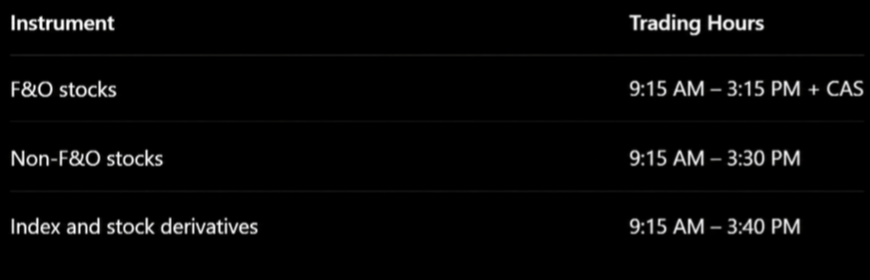
CAS Timeline Explained
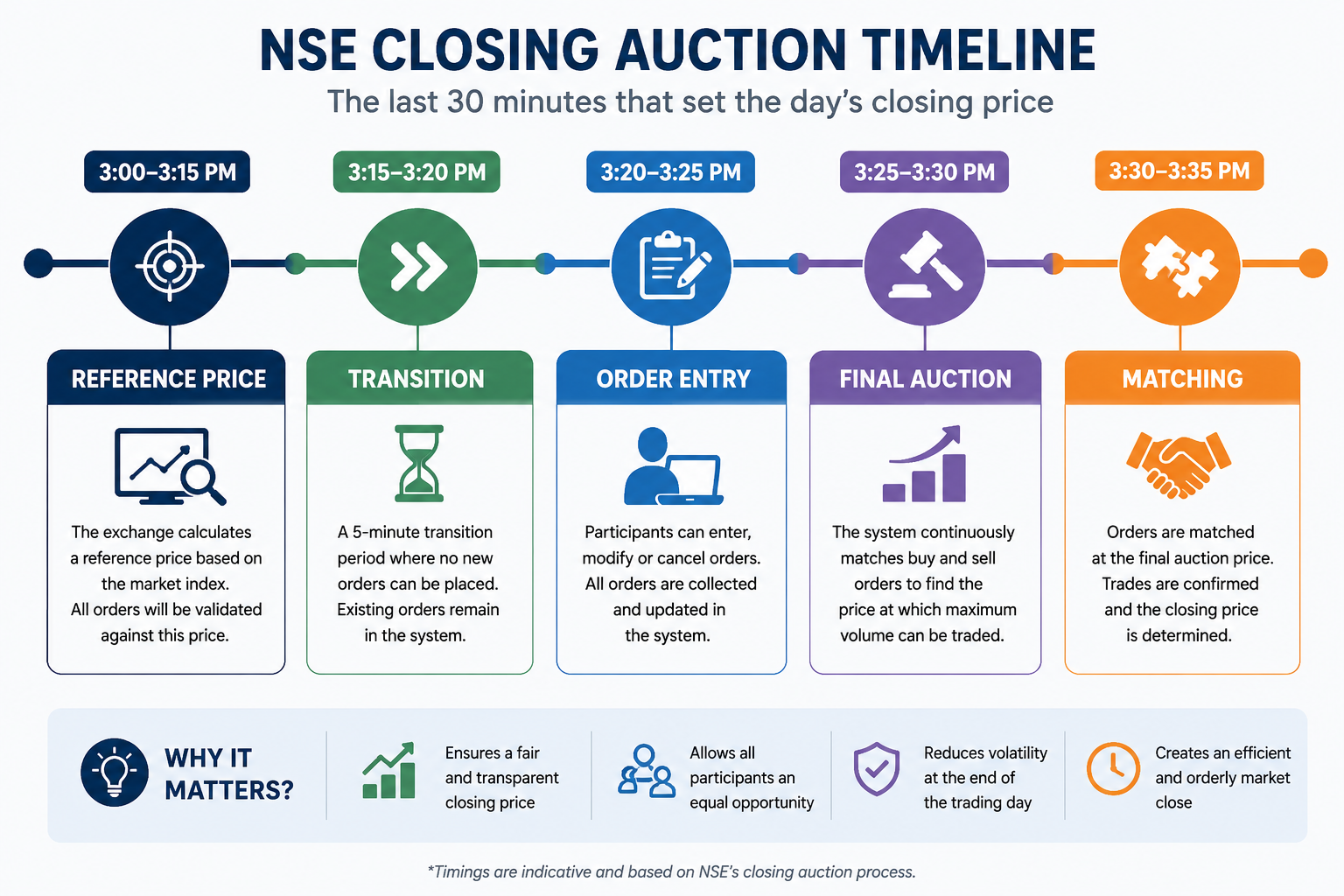
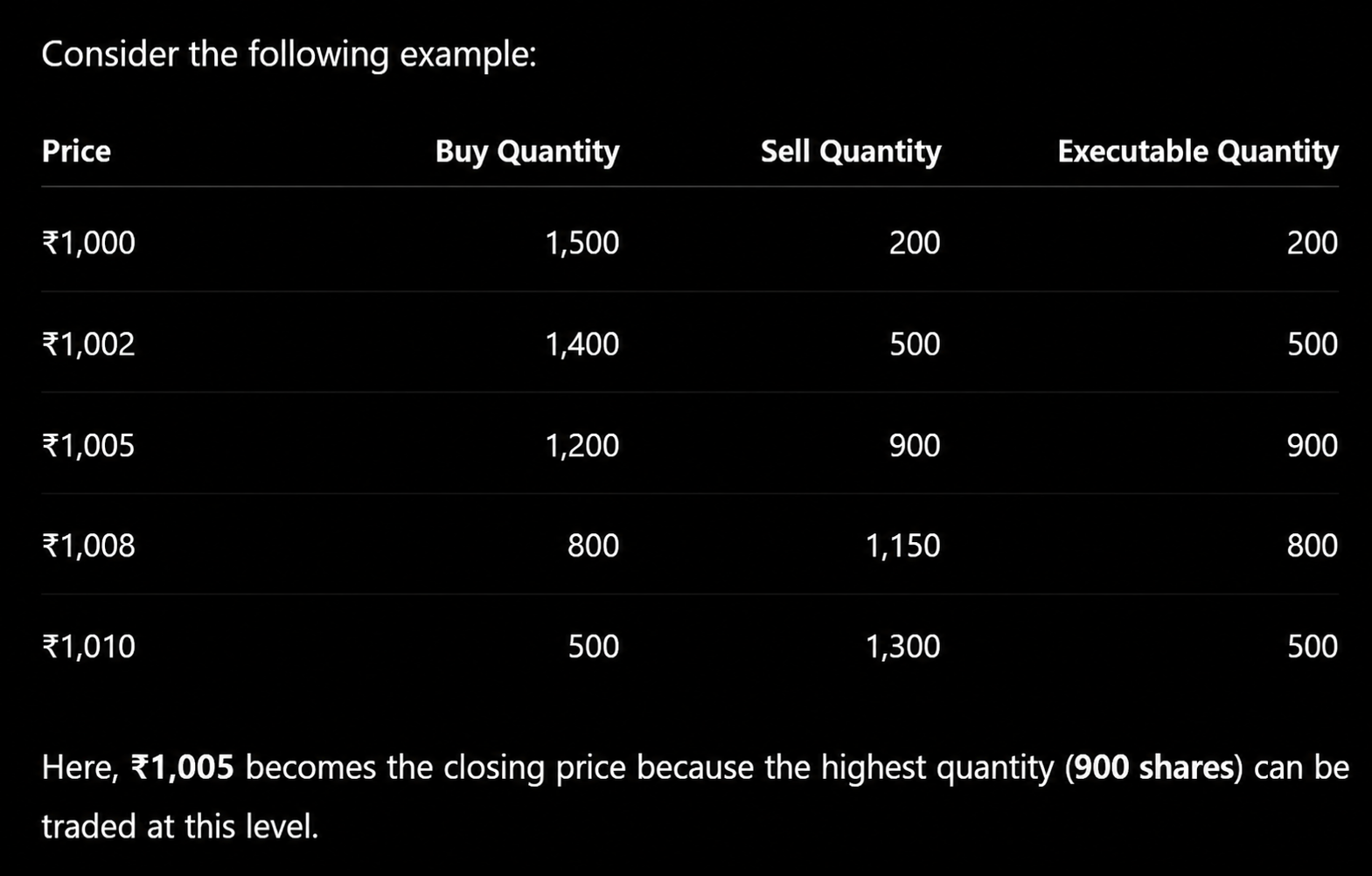
Orders are executed in the following order:
✅ Market orders
✅ Limit orders
❌ Stop-loss orders
❌ Iceberg orders
❌ Orders outside the ±3% price band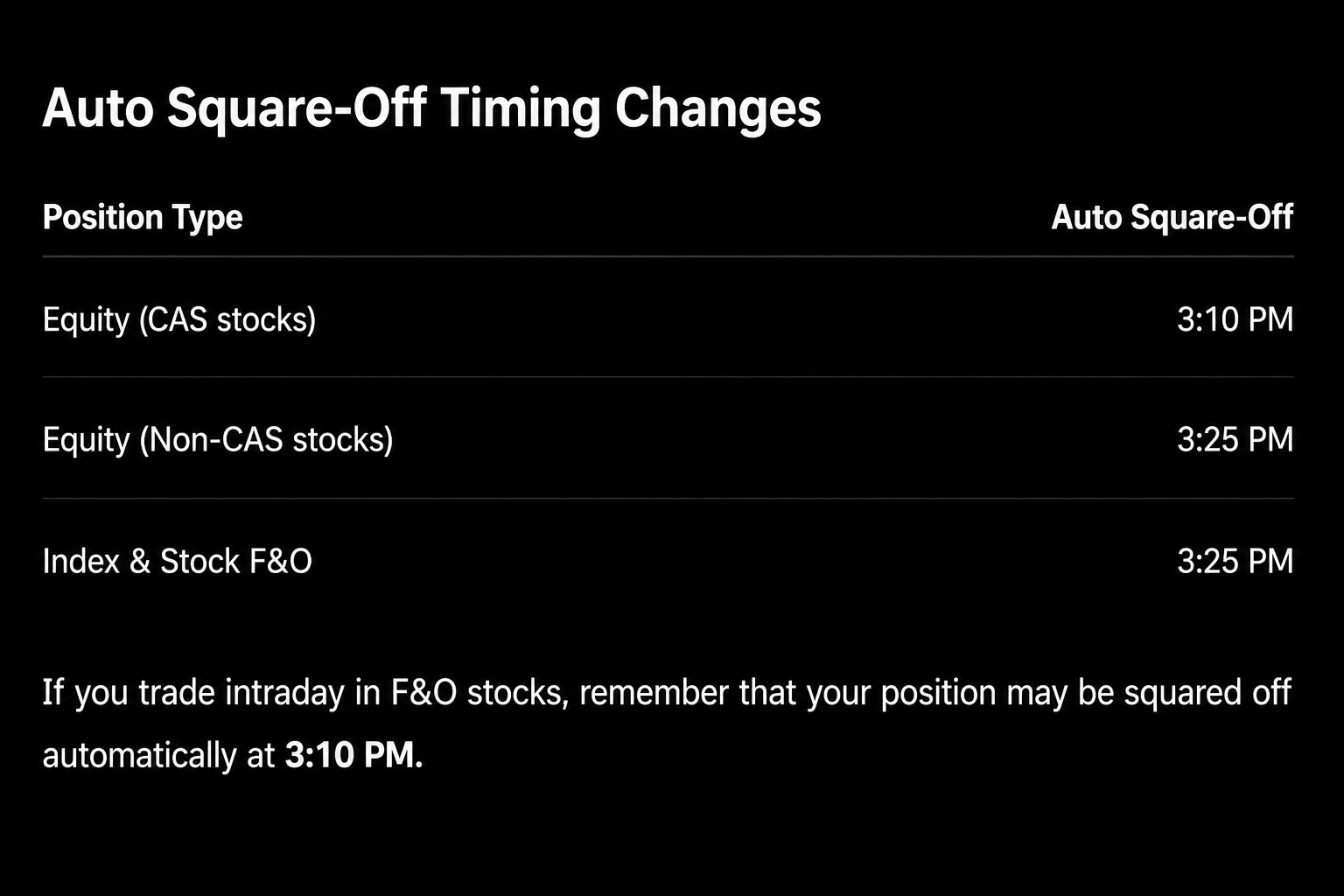
Final Takeaway:
However, for intraday traders and active market participants, it is important to understand:
Drop your thoughts below!
"Together let's chart our financial independence"

Gajapriya Annadurai
Full Time Trader & Investor, Founder @Stark School of Finance.
 Launch your Graphy